
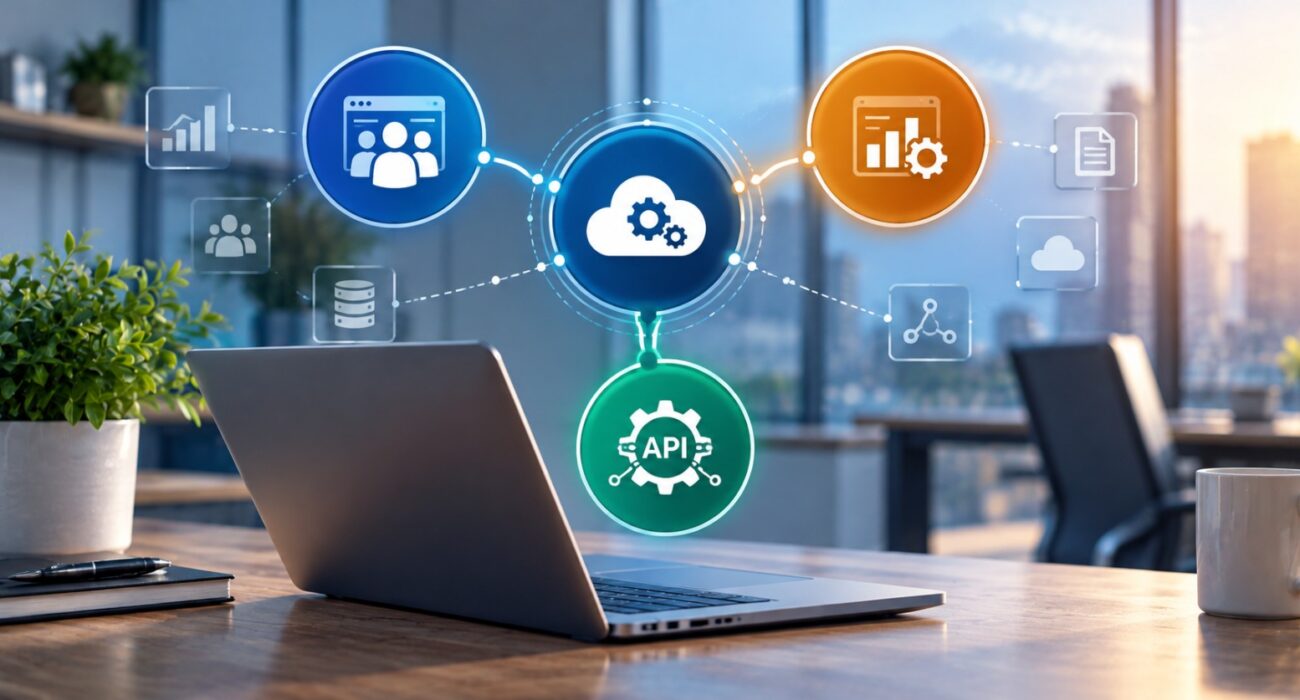
How Software Integration Helps Businesses Connect CRM, ERP and APIs

Modern businesses rely on multiple software systems to manage their daily operations. A company may use a CRM to manage customer relationships, an ERP platform to handle financial and operational processes, cloud applications for collaboration, payment platforms for transactions, and third-party tools for specialized business functions.
Each system can be useful on its own. The challenge begins when these systems operate independently.
What Is Software Integration?
Software integration is the process of connecting two or more software applications so they can exchange data or work together as part of a larger business workflow.
For example, a company might connect:
CRM → ERP → Payment Gateway → Reporting System
When these systems are properly integrated, information can move between them without requiring employees to repeatedly enter the same information manually.
Software integration can involve:
- CRM systems
- ERP platforms
- Business applications
- Databases
- Payment gateways
- Cloud applications
- Websites
- Mobile applications
- Third-party APIs
- Internal business tools
The exact integration architecture depends on the systems involved, the type of data being exchanged and the organization’s business requirements.
Why Do Businesses Need Software Integration?
As businesses grow, their technology environments often become more complex.
A small company may initially operate with a few standalone applications. As the organization expands, it may introduce additional systems for sales, finance, inventory, customer service, marketing, human resources and reporting.
Without integration, these systems can create disconnected information silos.
How CRM and ERP Integration Works
CRM and ERP systems typically serve different purposes.
A CRM, or Customer Relationship Management system, is commonly used for activities such as:
- Managing customer information
- Tracking leads
- Monitoring sales opportunities
- Managing customer interactions
- Following sales pipelines
An ERP, or Enterprise Resource Planning system, generally supports operational functions such as:
- Finance
- Accounting
- Inventory
- Procurement
- Order management
- Business operations
Connecting the two systems can help create a more seamless flow of information between customer-facing and operational teams.
What Is API Integration?
An API, or Application Programming Interface, provides a structured way for software applications to communicate with one another.
API integration allows one application to request information from or send information to another application according to the API’s capabilities and rules.
Key Benefits of Software Integration
1. Reduces Manual Data Entry
One of the most obvious benefits of integration is reducing repetitive data entry. If employees have to enter the same customer or order information into multiple applications, the process takes time and creates opportunities for mistakes.
2. Improves Data Consistency
When different departments maintain separate copies of information, discrepancies can occur.
3. Improves Operational Efficiency
Disconnected software systems can slow down workflows.
Employees may need to:
- Download reports
- Export spreadsheets
- Copy information
- Re-enter customer data
- Send files between departments
- Manually update records
Automated integrations can reduce unnecessary steps and create more efficient workflows.
4. Helps Businesses Automate Workflows
Software integration can become the foundation for business process automation.
5. Provides Better Access to Business Data
When systems are connected appropriately, employees can access relevant information without constantly switching between disconnected applications.
For example, a customer service representative may need information about:
- Customer history
- Orders
- Payment status
- Previous support interactions
Connecting relevant systems can make it easier to bring this information together.
FAQs
1. What is software integration?
Software integration is the process of connecting different applications, systems or data sources so they can communicate and exchange information.
2. What is CRM and ERP integration?
- CRM and ERP integration connects customer-facing systems with operational and financial systems, allowing relevant information to move between them.
3. What is API integration?
- API integration uses application programming interfaces to enable software applications to communicate and exchange data according to defined rules.
4. What are the benefits of CRM ERP integration?
CRM ERP integration can reduce manual data entry, improve data consistency, automate workflows, improve information sharing and support more efficient business operations.
5. Can software integration connect third-party applications?
Yes. APIs and other integration methods can connect businesses with third-party applications such as payment gateways, cloud platforms, e-commerce systems and specialized business tools.
Conclusion
Businesses depend on more software than ever before, but simply adding more applications does not automatically improve efficiency. When CRM systems, ERP platforms, APIs and other applications operate in isolation, businesses can face duplicated work, inconsistent information and inefficient processes.
Software integration helps bring these systems together.
By connecting CRM, ERP and API-based applications, businesses can improve data flow, reduce repetitive tasks, automate workflows and create a more connected technology environment.
Explore more about us: https://technolync.com/about/